
Teacup Yorkies: Health Risks, Real Size & What SA Buyers Should Know
A teacup is a small drinking vessel. It is not a breed classification.
Teacup, micro, baby doll face, pocket size, miniature — these are all marketing terms, not official classifications. This page explains what they actually mean, what the real health picture looks like, and how to make a calmer decision without getting pulled in by the hype.
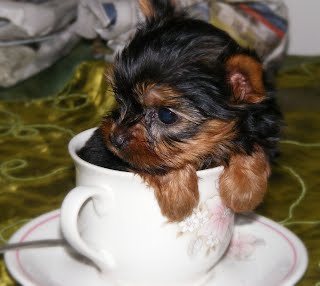
The terms 'teacup', 'micro', 'mini' and 'pocket' are descriptions, not official classifications. They tell you nothing about the dog's health or breeding quality.
So what is a teacup Yorkie really?
A Yorkshire Terrier is a very small dog. A very special little dog, as many owners would testify. The Kennel Union of South Africa (KUSA) breed standard is quite specific: a Yorkie's weight is up to 3.2 kg. There is no limit to how small it may be.
Many experienced Yorkie people believe anything less than 1.8 kg falls outside the ideal breed conformation. A Yorkie weighing between 1.8 kg and 3.2 kg is considered standard. But in South Africa, things are a bit different. When a "standard" Yorkshire Terrier is offered here, it is often larger than 3.2 kg — some have been known to grow past 8 kg. That is not standard according to KUSA.
The terms "teacup", "miniature", "pocket size" could literally mean anything. As these terms are not official classifications, they should be understood as descriptions, not guarantees.
This is the general, unofficial understanding
- Teacup — anything less than 1.2 kg (2.6 lbs)
- Pocket size — anything between 1.0 kg and 1.5 kg (2.2 to 3.3 lbs)
- Miniature — anything smaller than 1.8 kg (4 lbs)
Remember: many young puppies are able to fit in a teacup. That does not mean they will stay that size.
What the kennel clubs actually say
No major canine registry recognises "teacup" as a legitimate breed classification. The terms listed below are expressly prohibited in ethical breeder promotion by multiple kennel clubs.
| Registry | Max weight | Terms prohibited |
|---|---|---|
| American Kennel Club (AKC) | 3.2 kg (7 lbs) | "Teacup", "Micro", "Mini", "Pocket" |
| The Kennel Club (UK) | 3.2 kg (7 lbs) | "Teacup", "Micro", "Miniature" |
| KUSA (South Africa) | 3.2 kg (7 lbs) | "Teacup", "Micro", "Pocket" |
| United Kennel Club (UKC) | 3.2 kg (7 lbs) | "Teacup", "Toy" (as prefix) |
The Yorkshire Terrier Club of America (YTCA) Code of Ethics explicitly prohibits breeders from using terms like "teacup", "micro", "mini" or "pocket" in advertising. They classify these as deceptive marketing ploys designed to justify inflated prices for dogs that fail to meet breed health and conformation standards.
There is a real SEO paradox here. Because most buyers search for "teacup Yorkie" online, even ethical breeders sometimes need to include these terms to intercept search traffic, establish visibility, and educate people on the severe health compromises involved. This page does the same thing — not because we endorse the practice, but because you searched for it and deserve an honest answer.
Why size matters more than you think
The Yorkie was originally bred in 19th-century Yorkshire as a working ratter for coal mines and textile mills. The foundation sire of the modern Yorkshire Terrier was Huddersfield Ben, born in 1865, who weighed around 5 kg (11 lbs). Nineteenth-century specimens regularly weighed up to 6.8 kg (15 lbs). That background built a hardy little dog, not a fragile ornament. Selective breeding during the late Victorian era rapidly reduced their average weight to between 1.4 and 3.2 kg, and they transformed from industrial working ratters into highly prized lapdogs.
The drive to breed progressively smaller dogs — well below what nature and the breed standard intended — comes with real biological costs. A "teacup" is not a healthy animal that happens to be tiny. It is often the cumulative result of breeding practices that prioritise smallness over everything else.
Common health concerns in ultra-small Yorkies
- Congenital liver shunts (ECPSS) — The Yorkshire Terrier has an estimated 36-fold increased risk of developing congenital portosystemic shunts compared to the general canine population. In affected dogs, an anomalous blood vessel bypasses the liver, routing toxins directly into the bloodstream. This causes hepatic encephalopathy (seizures, head pressing, blindness, coma), severe growth failure (which unethical breeders often misrepresent as a healthy teacup trait), urinary stones, and chronic gastrointestinal distress. Diagnosing this requires specialised bile acid or ammonia testing, not a standard blood panel. Medical management alone gives a median survival of only about 10 months; surgical correction is possible but carries a 44% risk of severe complications in micro dogs.
- Cranial deformities — open fontanelles and hydrocephalus — Breeding for extremely small, dome-shaped skulls often leaves the bones of the skull unfused. This is called a persistent open fontanelle (a soft spot on top of the head). It is closely linked to congenital hydrocephalus — "water on the brain" — where cerebrospinal fluid cannot drain properly and builds up pressure inside the skull. Symptoms include a "setting sun" appearance of the eyes, learning disabilities, difficulty with house training (over 75% of cases), aimless circling, seizures, and cortical blindness. Surgical placement of a shunt to drain the fluid has about an 80% success rate in standard toy breeds, but in a dog under 1.5 kg the surgery is exceptionally difficult.
- Skeletal fragility — Extremely small Yorkies have softer, more breakable bones. A jump off the couch can cause a fracture. The constant intra-cranial pressure from hydrocephalus also thins the cranial bones.
- Hypoglycaemia — Less body mass means fewer reserves. Low blood sugar can hit fast and hard in tiny dogs and can be fatal.
- Tracheal collapse — The smaller the airways, the more prone they are to narrowing and coughing fits.
- Dental problems — Crowded or weak teeth, retained baby teeth that need surgical removal, and early tooth loss. Yorkies already have a high risk of dental disease; miniaturisation makes it worse.
- Anaesthesia risk — Surgery and dental procedures carry higher risk for extremely small dogs. Their metabolic reserves are minimal and their tiny anatomy makes intubation and monitoring more difficult.
The ethical picture
- No official classification — Teacup is a marketing term, not a recognised variety.
- Inbreeding risk — Achieving extreme smallness often involves line breeding or inbreeding, which concentrates genetic defects.
- Survival of the fittest, reversed — In nature, the smallest and weakest are not chosen for breeding. In some breeding operations, they are specifically selected for tininess over health.
- Vet bills follow — If you need to save up for a pricey teacup, you may find you cannot afford the vet bills when something goes wrong.
- Stress on owner and dog — It can be stressful living with a dog so fragile. If you have children, this should be very carefully considered.
The terrier trapped in a tiny body
Here is the uncomfortable reality that many sellers do not mention. A Yorkie is a terrier. It has a strong prey drive, high energy, an independent nature, and territorial instincts. It is vocal and vigilant by design.
But an ultra-small Yorkie cannot safely act like a terrier. A run-in with a larger dog can be fatal. Rough handling by children can be fatal. So owners often end up carrying these dogs in bags and purses, depriving them of floor-level socialisation and natural canine interaction. The dog never learns proper social cues or body language.
The result is "small dog syndrome" — chronic anxiety, fear-based territorial aggression, and constant vocalisation. The dog is trapped between its terrier instincts and a body that cannot safely express them. That is not a happy life for the dog, and it is not an easy life for the owner either.
How teacup Yorkies are actually produced
Consistently producing dogs under 1.8 kg is rarely an accidental biological variation. While exceptionally small individuals occasionally occur naturally within standard litters due to genetic recessiveness or developmental anomalies, ethical breeders do not use these dogs for further breeding because of the severe health risks to both parents and offspring.
When unethical breeders set out to produce micro-sized puppies, they employ several highly damaging methods:
Selective breeding of runts
The smallest, often structurally compromised runts from different litters are repeatedly mated together. This concentrates deleterious recessive alleles and congenital defects, passing chronic pathologies down through generations.
Extreme inbreeding
Close familial matings are used to rapidly fix the trait of small stature. This drastically reduces genetic diversity, leading to inbreeding depression and higher expression of hereditary illnesses.
Induced premature labour
To ensure puppies are small at the time of sale, some operators induce early birth. This results in neonates with underdeveloped lungs, hearts, and livers — ensuring permanent stunting if the puppy survives.
Early maternal separation
Removing puppies from the mother before the ethically mandated 8-week mark is another method used to artificially limit growth. This deprives the puppy of critical maternal antibodies and early nutrition.
Caloric restriction
Some breeders deliberately underfeed the mother during pregnancy and lactation, or the growing puppies, to prevent them from reaching their genetically programmed adult size. This causes catastrophic, irreversible damage to internal organs, metabolic pathways, and bone density.
Breeding tiny females
Breeding very small females (dams under 1.8 kg) is dangerous and can be fatal. Their pelvic canals are too narrow for natural birth, requiring emergency caesareans. The metabolic stress of pregnancy and nursing frequently triggers life-threatening eclampsia or severe hypoglycaemia in these dogs, who simply lack the bodily reserves to sustain both themselves and their puppies.
The best advice: see the parents and ask questions
The best you can do to understand the size of the dog you are considering is to go and see the parents for yourself. Ask the breeder how big they expect the puppy to grow. Remember though, no one can guarantee the adult size — small parents can produce big pups and vice versa.
What matters more than size
- A dog's health and temperament
- Whether your home is set up for a small, fragile dog
- Whether you can afford routine vet care and emergencies
- Whether there are children who need to learn gentle handling
- Whether you have considered rescue first
A note on short and stocky
You can have a light-weight Yorkie, called a "teacup", that is long and spindly. The term "short and stocky" describes a more robust conformation. There is no height specification in the breed standard, but a well-built small Yorkie tends to be healthier than a fragile one. Do not confuse tiny with delicate.
Make a wise decision and avoid the heartache. The smaller the dog, the more expensive it tends to be — not just to buy, but to keep healthy. If something goes wrong with a teacup, the vet bills can be significant. The stress on the owner and the dog can be significant too. A Yorkie is a real terrier with a big personality, not a novelty item to fit in a handbag.
Before you buy, think about adoption
Reputable rescue organisations like SA Yorkie Rescue (SAYR) do not use the term "teacup" because it is not a recognised classification. They match Yorkies based on temperament, age and care needs rather than marketing labels. Many Yorkies in rescue are healthy, standard-size dogs looking for calm homes.
If you are set on a very small Yorkie, at least understand what you are getting into. Read the breed guide first. Understand the health risks. Talk to a vet before you commit. And if rescue is an option for you, start there — you might find exactly the right dog without supporting the teacup market at all.
If you are not in a position to adopt a Yorkie but still want to help a dog in need, small dog rescue organisations also welcome support.
Common questions about teacup Yorkies
Is "teacup Yorkie" a real breed?
No. "Teacup" is not an officially recognised breed classification. It is a marketing term used to describe Yorkies bred to be unusually small. Major kennel clubs like AKC, KUSA and the UK Kennel Club do not recognise teacup, micro, mini or pocket as breed varieties. The YTCA Code of Ethics actually prohibits breeders from using these terms.
What does a teacup Yorkie weigh?
There is no official weight, but the general understanding is that a teacup weighs less than 1.2 kg (2.6 lbs) as an adult. The official breed standard says a Yorkie should not exceed 3.2 kg (7 lbs), and the preferred range is 1.8 kg to 3.2 kg (4 to 7 lbs). Anything under 1.8 kg is outside ideal conformation.
Are teacup Yorkies healthy?
No, teacup Yorkies tend to have significantly more health problems than standard Yorkies. The drive to breed progressively smaller dogs comes with serious biological costs: congenital liver shunts (ECPSS), hydrocephalus, fragile bones that break easily, collapsing trachea, severe hypoglycaemia, chronic dental disease, and higher anaesthesia risk. The Yorkshire Terrier breed already has a 36-fold increased risk of liver shunts compared to other breeds; miniaturisation compounds this. Always talk to a vet who has experience with toy breeds before committing to an extremely small dog.
What is a liver shunt and why does it matter for teacup Yorkies?
A liver shunt (portosystemic shunt) is a congenital condition where blood bypasses the liver instead of being filtered through it. This means toxins accumulate in the bloodstream, causing seizures, blindness, stunted growth, and urinary stones. Yorkies are genetically predisposed — about 36 times more likely than most other breeds. When breeders select for ultra-small size, they often inadvertently select for dogs small because of an undiagnosed shunt. Diagnosis requires specialised bile acid testing, not a routine blood panel. Medical management alone gives a median survival of about 10 months; surgery is possible but high-risk in micro dogs.
How long do teacup Yorkies live?
A well-cared-for standard Yorkie can live 12 to 15 years. Teacup Yorkies often have shorter lifespans due to increased vulnerability to health complications and accidental injury. Their tiny bodies have less reserve to cope with illness or stress.
Where can I adopt a teacup Yorkie in South Africa?
Reputable rescue organisations do not use the term "teacup" because it is not a recognised classification. SA Yorkie Rescue (SAYR) matches Yorkies based on temperament and care needs, not marketing labels. Contact them via sayr.co.za if you want to adopt.
Make an informed decision
Whether you buy or adopt, the most important thing is understanding what a Yorkie actually needs — not getting caught up in marketing terms.