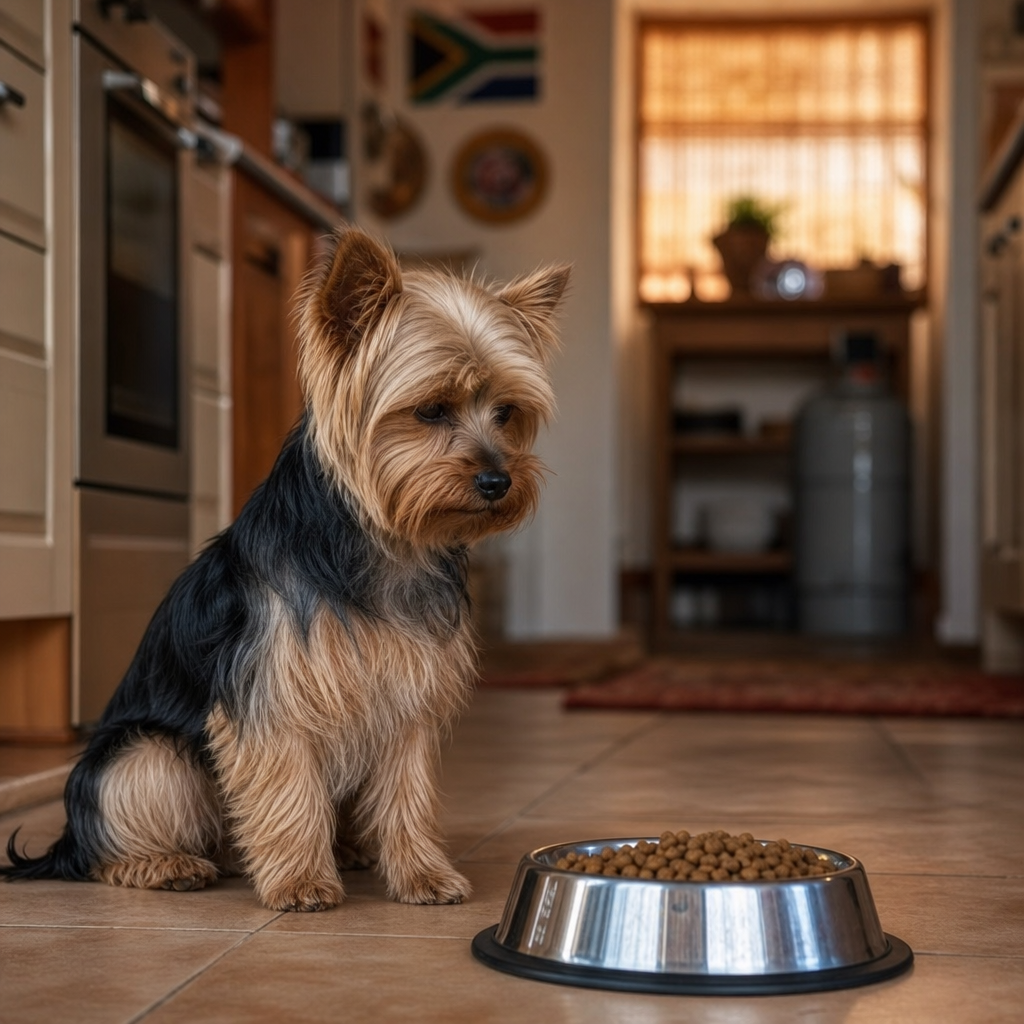
Yorkie not eating? Here is what to do
A Yorkie that skips one meal while acting normal is probably fine. A Yorkie that stops eating and is also quiet, shaking, vomiting, or acting off needs attention fast. Tiny dogs have no reserves. Do not guess — check.
Call a vet urgently if
- Your Yorkie is weak, collapsed, shaking badly, wobbly, or hard to wake.
- There is repeated vomiting, diarrhoea, blood, bloating, coughing, or breathing trouble.
- A puppy, senior, diabetic dog, frail dog, or very small Yorkie refuses food.
- Your dog cannot keep water down or seems dehydrated.
- The appetite loss follows possible toxin, medication, plant, or foreign-object access.
Useful things to check calmly
- Has anything changed: food, routine, stress, travel, heat, visitors, or grooming?
- Is the food fresh, familiar, and served at normal temperature?
- Are the gums, teeth, or mouth sore? Dental pain is common in small dogs.
- Is your Yorkie still drinking, toileting, moving, and breathing normally?
- Could treats, table scraps, or anxiety be disrupting the meal routine?
Tiny dogs can deteriorate faster than you expect
A healthy adult Yorkie skipping one meal while bright, drinking, and behaving normally may just need watching. A Yorkie that is young, elderly, frail, diabetic, vomiting, shaking, dehydrated, or acting "not right" should be taken seriously. Do not wait for a small dog to look dramatic before asking for help. If the pattern is unusual for your dog, or if more than one symptom is present, phone your vet.
Safe first steps at home
- Keep your Yorkie warm, quiet, and close enough to observe.
- Offer fresh water and the normal food without forcing either.
- Remove rich treats, bones, table scraps, and anything scavenged.
- Check the mouth gently only if your dog allows it without pain or snapping.
- Write down when your Yorkie last ate, drank, toileted, vomited, or seemed normal.
What not to do
- Do not give human medicine, painkillers, appetite stimulants, or stomach remedies without vet guidance.
- Do not force-feed a dog that may be nauseous, painful, bloated, or obstructed.
- Do not assume appetite loss is stubbornness if behaviour, breathing, or energy has changed.
- Do not wait overnight if your Yorkie is weak, shaking, repeatedly sick, or refusing water.
Common reasons a Yorkie may stop eating
Appetite loss can follow stress, a heatwave, a food change, dental pain, nausea, tummy upset, parasites, infection, injury, medication, or anxiety. Newly adopted and rescue Yorkies may also eat poorly while they work out whether the new home is safe.
The cause matters less than the full picture. A dog that refuses breakfast but is playful may need monitoring. A dog that refuses food and is quiet, hunched, shaking, vomiting, or hiding needs faster advice.
For rescue or newly rehomed Yorkies
A newly rehomed Yorkie may eat lightly at first because everything is unfamiliar. Keep meals predictable, avoid crowding the dog, and do not keep changing foods in panic. If appetite does not improve, or if any health signs appear, book a vet check.
For puppies and very small Yorkies
Puppies and tiny Yorkies have less reserve. Missed meals matter more when the dog is small, young, cold, weak, vomiting, or unusually sleepy. Keep them warm and phone your vet early if they are not eating normally.
What to tell the vet
- When your Yorkie last ate and drank normally.
- Whether water intake, vomiting, stools, breathing, or energy changed.
- Any new food, treats, bones, medication, plants, or stress.
- Age, weight, known health issues, and whether your Yorkie is a puppy, senior, diabetic, or frail.
- Whether the appetite loss is sudden, gradual, repeated, or linked to a known trigger.